
Saturday, November 24, 2012


Friday, November 23, 2012
Thursday, November 22, 2012
I care more about Bradley Cooper's jazzy, crazy, messy Pat in Silver Linings Playbook than I do Daniel Day Lewis's noble Lincoln perfection.
— Bret Easton Ellis (@BretEastonEllis) November 21, 2012
Wednesday, November 21, 2012
Pere Ubu: "Stormy Weather" and "Thoughts That Go By Steam"
I've heard of Pere Ubu, but never actually heard its music, until I sought it out tonight. Within a few seconds of listening to "Stormy Weather" I was hooked. Among the things I am thankful for are YouTube, Wikipedia, and this music.
Monday, November 19, 2012
Kunstler: Epic Disappointment
Kunstler takes on what the press calls "Saudi America" (because U.S. oil reserves supposedly rival those of Saudi Arabia).
http://kunstler.com/blog/2012/11/epic-disappointment.html
Epic Disappointment
By James Howard Kunstler
on November 19, 2012 9:01 AM
Those inhabiting the economic wish-space got a case of the vapors last week when the Paris-based International Energy Agency (IEA) published an annual report stating that the USA would overtake Saudi Arabia as the world's leading oil producer and reach the long-touted nirvana of "energy independence." The news was greeted in this country with jubilation. Thus, peak credulity meets peak bullshit.
It's been clear for a while that authorities in many realms of endeavor - politics, economics, business, media - are very eager to sustain the illusion that we can keep our way of life chugging along. But under the management of these elites, the divorce between truth and reality is nearly complete. The financial system now runs entirely on accounting fraud. Government runs on the fumes of statistical fraud. The business of oil and gas runs on public relations fraud. And the media runs on the understandable wish of the masses to believe that all the foregoing illusions still work to maintain the familiar comforts of modern life (minus Hostess Ho-Hos and Twinkies*, alas).
And so the story has developed that the shale oil plays of North Dakota and Texas, which started ramping up around 2005 - the same year the world hit the wall of peak conventional oil - and the shale gas plays in Texas, Louisiana, Pennsylvania, New York, and Ohio would enable American "consumers" to drive to WalMart effectively forever.
Now, it happens that the particulars of oil and gas production are so abstruse that the editors of The New York Times, The Bloomberg News Service, CNN, and a score of other mass media giants swallowed the IEA report whole, with fanfares and fireworks, and a nation afflicted with doubt about its future swooned into the first week of the holidays in celebration mode - we're soon to be number 1 again, and the future is secure! Have a nice Thanksgiving and Christmas and prepare to sober up in 2013. When the truth finally emerges from this morass of dissimulation, the disappointment will be epic.
Here's why the shale oil story is not the "game changer" that the wishful claim it is: the price required to get it out of the ground (between $80-90 a barrel) will crush the US economy. Since prices are already in that range, the economy is already being crushed. The result is an economy in more-or-less permanent contraction. As demand for oil falls with declining economic activity the price of oil falls - below the level that makes it worthwhile to conduct expensive shale oil drilling and fracking operations.
Meanwhile, in the background, as economies contract and economic "growth" of the type our system requires no longer happens, the problems in finance and banking get a lot worse. This is largely because interest on borrowed money can no longer be paid back. Loans are defaulted on. As this happens, banks become insolvent. Governments play games with public money - including "money" they "create" out of thin air - to prop up the banks. None of it alters the sad fact that there is not enough real money in the system. The result of all these desperate monkeyshines is the impairment if capital formation. That is, the failure to accumulate new wealth. The lack of new wealth, along with declining prospects for the repayment of loans, leads to a shortage of credit, especially to businesses that require large supplies of it to keep gigantic complex operations like shale oil and gas going.
Shale oil (and shale gas) share some problematical properties. The cost of drilling each well is a big number, $6-8 million. The wells deplete very rapidly, over 40 percent after one year in the Bakken formation of North Dakota. The oil is not distributed equally over the whole play but exists in "sweet spots." The sweetest sweet spots were drilled the earliest and the quality of the remaining potential drill sites is already in decline. The current trend shows declining first-year productivity in new wells drilled since 2010 running at 25 percent.
There are over 4300 wells shale oil in the Bakken formation of North Dakota producing about 610,000 barrels a day. In order to keep production up, the number of wells will have to continue increasing at a faster rate than previously. This is referred to as "the Red Queen syndrome" which alludes to the character in Alice in Wonderland who famously declared that she had to run faster and faster just to stay where she is. The catch to all this is that the impairments of capital formation are working insidiously in the background to guarantee that the money will not be there to set up the necessary wells to keep production at current levels. In other words, shale oil (and shale gas) are Ponzi schemes. The story in the Eagle Ford play in Texas is very similar.
I haven't even mentioned the concerns about fracking and its effect on ground water, and won't go into it here, except to acknowledge that it presents an additional range of concerns.
The current price situation in shale gas is different than shale oil. The drilling frenzy in shale gas produced a glut, which drove down prices from a $13 a unit (thousand cubic feet or mcf) to around $2 at its low point earlier this year. That's way below the price that is economically rational to drill and frack for it. The price collapse has played havoc among the companies engaged in shale gas, though it has been a boon to customers. A lot of the drilling equipment has moved to the North Dakota oil fields. There will be less shale gas in the period ahead and the price will go up. It has got to go above about $8 a unit or there will be no reason for any company to be in the shale gas business. But as is always the case in such a correction, the price will surely overshoot $8, at which point it will become unaffordable to its customers. The volatility alone will make the business of shale gas drilling impossible to maintain. Forget about the USA becoming a major gas exporter.
You probably get the point by now, so I will only add a couple of out-of-the-box considerations vis-à-vis the prospect of the USA becoming energy independent.
-- Production is getting so low in the Prudhoe Bay fields of Alaska that the famous pipeline may not be able to operate. If the flow of oil reaches a certain low volume, it takes longer to make the long journey. The oil cools down and gets sludgy and some of the water that travels with it will freeze. This could destroy the pipeline. The capital is not there to retrofit the pipeline for a depleting oil field in a region that is difficult and expensive to work in.
-- Exporting countries (the ones that send us oil) are depleting their reserves and using more of their own oil, resulting in annually declining export rates. China, India, and other still-modernizing nations compete for a growing share of that declining export flow.
-- I have barely hinted at the geopolitical forces roiling behind the sheer business dynamics. But here's an interesting one: the time will come when the US will invoke the Monroe Doctrine to prevent Canada from sending its oil and tar-sand byproducts to nations other than ourselves. Just wait.
Finally, I have one flat-out prediction, one I have made before but deserves repeating: Japan will be the first society to consciously opt out of being an advanced industrial economy. They have no other apparent choice really, having next-to-zero oil, gas, or coal reserves of their own, and having lost faith in nuclear power. They will be the first country to enter a world made by hand. They were very good at it before about 1850 and had a pre-industrial culture of high artistry and grace - though, granted, all the defects of human psychology.
I don't think the US can make that transition in an orderly way. We're too stricken with techno-narcissism and grandiosity. What troubles me is how we will greet the epic disappointment that waits for us when we discover that the journey to WalMart is over. My guess is that being predisposed to superstition and religious fanaticism, the American public will violently reject science and rationality and retreat into a world of shadows. We're already well on our way. The IEA report will just accelerate things.
====
*Twinkies, and perhaps its sister brands, may be preserved if Grupo Bimbo acquires the rights to the products from Hostess Brands.
Nancy Nall had to say, "I have nothing to say about Hostess, except that I don’t eat that crap myself. Twinkies. Bleh."
I can think of many things that are "Bleh" before Twinkies, which I've enjoyed on occasion. (What does Nancy like to snack on, then?)
http://kunstler.com/blog/2012/11/epic-disappointment.html
Epic Disappointment
By James Howard Kunstler
on November 19, 2012 9:01 AM
Those inhabiting the economic wish-space got a case of the vapors last week when the Paris-based International Energy Agency (IEA) published an annual report stating that the USA would overtake Saudi Arabia as the world's leading oil producer and reach the long-touted nirvana of "energy independence." The news was greeted in this country with jubilation. Thus, peak credulity meets peak bullshit.
It's been clear for a while that authorities in many realms of endeavor - politics, economics, business, media - are very eager to sustain the illusion that we can keep our way of life chugging along. But under the management of these elites, the divorce between truth and reality is nearly complete. The financial system now runs entirely on accounting fraud. Government runs on the fumes of statistical fraud. The business of oil and gas runs on public relations fraud. And the media runs on the understandable wish of the masses to believe that all the foregoing illusions still work to maintain the familiar comforts of modern life (minus Hostess Ho-Hos and Twinkies*, alas).
And so the story has developed that the shale oil plays of North Dakota and Texas, which started ramping up around 2005 - the same year the world hit the wall of peak conventional oil - and the shale gas plays in Texas, Louisiana, Pennsylvania, New York, and Ohio would enable American "consumers" to drive to WalMart effectively forever.
Now, it happens that the particulars of oil and gas production are so abstruse that the editors of The New York Times, The Bloomberg News Service, CNN, and a score of other mass media giants swallowed the IEA report whole, with fanfares and fireworks, and a nation afflicted with doubt about its future swooned into the first week of the holidays in celebration mode - we're soon to be number 1 again, and the future is secure! Have a nice Thanksgiving and Christmas and prepare to sober up in 2013. When the truth finally emerges from this morass of dissimulation, the disappointment will be epic.
Here's why the shale oil story is not the "game changer" that the wishful claim it is: the price required to get it out of the ground (between $80-90 a barrel) will crush the US economy. Since prices are already in that range, the economy is already being crushed. The result is an economy in more-or-less permanent contraction. As demand for oil falls with declining economic activity the price of oil falls - below the level that makes it worthwhile to conduct expensive shale oil drilling and fracking operations.
Meanwhile, in the background, as economies contract and economic "growth" of the type our system requires no longer happens, the problems in finance and banking get a lot worse. This is largely because interest on borrowed money can no longer be paid back. Loans are defaulted on. As this happens, banks become insolvent. Governments play games with public money - including "money" they "create" out of thin air - to prop up the banks. None of it alters the sad fact that there is not enough real money in the system. The result of all these desperate monkeyshines is the impairment if capital formation. That is, the failure to accumulate new wealth. The lack of new wealth, along with declining prospects for the repayment of loans, leads to a shortage of credit, especially to businesses that require large supplies of it to keep gigantic complex operations like shale oil and gas going.
Shale oil (and shale gas) share some problematical properties. The cost of drilling each well is a big number, $6-8 million. The wells deplete very rapidly, over 40 percent after one year in the Bakken formation of North Dakota. The oil is not distributed equally over the whole play but exists in "sweet spots." The sweetest sweet spots were drilled the earliest and the quality of the remaining potential drill sites is already in decline. The current trend shows declining first-year productivity in new wells drilled since 2010 running at 25 percent.
There are over 4300 wells shale oil in the Bakken formation of North Dakota producing about 610,000 barrels a day. In order to keep production up, the number of wells will have to continue increasing at a faster rate than previously. This is referred to as "the Red Queen syndrome" which alludes to the character in Alice in Wonderland who famously declared that she had to run faster and faster just to stay where she is. The catch to all this is that the impairments of capital formation are working insidiously in the background to guarantee that the money will not be there to set up the necessary wells to keep production at current levels. In other words, shale oil (and shale gas) are Ponzi schemes. The story in the Eagle Ford play in Texas is very similar.
I haven't even mentioned the concerns about fracking and its effect on ground water, and won't go into it here, except to acknowledge that it presents an additional range of concerns.
The current price situation in shale gas is different than shale oil. The drilling frenzy in shale gas produced a glut, which drove down prices from a $13 a unit (thousand cubic feet or mcf) to around $2 at its low point earlier this year. That's way below the price that is economically rational to drill and frack for it. The price collapse has played havoc among the companies engaged in shale gas, though it has been a boon to customers. A lot of the drilling equipment has moved to the North Dakota oil fields. There will be less shale gas in the period ahead and the price will go up. It has got to go above about $8 a unit or there will be no reason for any company to be in the shale gas business. But as is always the case in such a correction, the price will surely overshoot $8, at which point it will become unaffordable to its customers. The volatility alone will make the business of shale gas drilling impossible to maintain. Forget about the USA becoming a major gas exporter.
You probably get the point by now, so I will only add a couple of out-of-the-box considerations vis-à-vis the prospect of the USA becoming energy independent.
-- Production is getting so low in the Prudhoe Bay fields of Alaska that the famous pipeline may not be able to operate. If the flow of oil reaches a certain low volume, it takes longer to make the long journey. The oil cools down and gets sludgy and some of the water that travels with it will freeze. This could destroy the pipeline. The capital is not there to retrofit the pipeline for a depleting oil field in a region that is difficult and expensive to work in.
-- Exporting countries (the ones that send us oil) are depleting their reserves and using more of their own oil, resulting in annually declining export rates. China, India, and other still-modernizing nations compete for a growing share of that declining export flow.
-- I have barely hinted at the geopolitical forces roiling behind the sheer business dynamics. But here's an interesting one: the time will come when the US will invoke the Monroe Doctrine to prevent Canada from sending its oil and tar-sand byproducts to nations other than ourselves. Just wait.
Finally, I have one flat-out prediction, one I have made before but deserves repeating: Japan will be the first society to consciously opt out of being an advanced industrial economy. They have no other apparent choice really, having next-to-zero oil, gas, or coal reserves of their own, and having lost faith in nuclear power. They will be the first country to enter a world made by hand. They were very good at it before about 1850 and had a pre-industrial culture of high artistry and grace - though, granted, all the defects of human psychology.
I don't think the US can make that transition in an orderly way. We're too stricken with techno-narcissism and grandiosity. What troubles me is how we will greet the epic disappointment that waits for us when we discover that the journey to WalMart is over. My guess is that being predisposed to superstition and religious fanaticism, the American public will violently reject science and rationality and retreat into a world of shadows. We're already well on our way. The IEA report will just accelerate things.
====
*Twinkies, and perhaps its sister brands, may be preserved if Grupo Bimbo acquires the rights to the products from Hostess Brands.
Nancy Nall had to say, "I have nothing to say about Hostess, except that I don’t eat that crap myself. Twinkies. Bleh."
I can think of many things that are "Bleh" before Twinkies, which I've enjoyed on occasion. (What does Nancy like to snack on, then?)
Monday, November 12, 2012
Kunstler: A Look in the Mirror
[23 November update: I added links to Wikipedia articles on John Birch, Robert Welch, Welch;s candy company, and Fred Koch.]
A Look in the Mirror
By James Howard Kunstler
on November 12, 2012 8:57 AM
The verdict is apparently in: if Fox News will replace its current heraldic theme music with a mariachi band, and Sean Hannity puts on a sombrero for his nightly broadcast prayer circle, then the Republican Party will once again rule the land...
...Not - in the immortal word of Borat Sagdiyev.
The so-called Grand Old Party now faces a fugue of recrimination that could end in its demise. The party marginalized itself by becoming an alliance of corporate oligarchs with poorly-educated Southern suburban white trash religious fanatics, both using each other to browbeat the nation into transforming itself into kleptocratic theocracy. There are no more people of good will and intelligence left in that camp, and a blame-fest between its two remaining factions can only lead to a death struggle.
The beginning of the end really came with the death of William F. Buckley in 2008. Buckley labored for years to keep the John Birch Society and its agents out of the GOP's leadership circles. For those of you unacquainted with this organization, it was a group that coalesced during the early 1950s anti-communist crusade of Wisconsin Senator Joseph McCarthy. The Birchers named themselves after an obscure American soldier and Baptist missionary executed by the Red Army in China during the final months of World War Two. The group was founded and funded by Robert Welch, a Boston candy manufacturer (Junior Mints, Sugar Daddy) tormented by conspiracy fantasies. Another founding board member was Fred Koch, father of the billionaire Koch brothers, Charles and David, who have become the latter-day sugar daddies of the Republican Party.
The Birchers retailed all kinds of ideological nonsense that made them the butt of ridicule during the Camelot days of John F. Kennedy and the heady Civil Rights years of his successor Lyndon B. Johnson. (Bob Dylan wrote a song about them in 1962: "Talkin' John Birch Paranoid Blues.") Everything perceived to be a threat in a changing society was sold by the Birchers as a communist plot - water fluoridation, de-segregation, even, by a kind of tortured logic, the US strategy in the Vietnam War. Since a Democratic president and congress passed the civil rights legislation of 1964-5, the traditionally Democratic "solid South" revolted almost overnight and eventually turned solidly Republican. (It was also good for business.)
Something else was going on in Dixieland from the late 1950s on. The region boomed economically, partly from luring northern industry down with cheap labor, and partly because so many large military bases were located there - hence the hyperbolic, militant patriotism of a region that had lately staged a violent insurrection against the national government. The region also went through an explosion of air-conditioned suburban sprawl because the southern states were geographically huge and the climate was unbearable half the year. The sprawl industry itself generated vast fortunes and widespread prosperity in a part of the country that had been a depressed agricultural backwater since the Civil War.
Consequently, a population of poor, ignorant crackers crawled out of the mud and dust to find themselves wealthy car dealers and strip-mall magnates in barely one turn of a generation. The transition being so abrupt, their cracker culture of xenophobia, "primitive" religion, and romance with violence came through intact. They were the perfect client group for a political party that styled itself "conservative," as in maintaining the old timey ways. Toward the end of the 20th century, as the old northern states' economies withered, and Yankee culture lost both footing and meaning, and poor white folks all over America looked with envy on the glitz of country music and Nascar, and gravitated toward the Dixieland culture of belligerent, aggressive suburbanization, religiosity, and militarism. This cartoon of the old timey ways swept the "flyover" precincts of the nation. Along in the baggage compartment was all the old John Birch Society cargo of quasi-supernatural ideology that appealed so deeply to people perplexed by the mystifying operations of reality. That perplexity was supposedly resolved in a Bush II White House aide famously stating, "We make our own reality." The results of the 2012 election now conclusively demonstrate the shortcomings of that world-view.
And so the news last week was that a different version of America outvoted the John Birch Dixiecrat coalition by roughly two million ballots. Meaning, of course, that there are still a lot of dangerous morons out there, but also that the times they are yet a'changin' again. I am personally glad that Mr. Romney lost because he came across to me as a dangerously hollow, not very smart, pre-cooked personality marinated in cant and opportunism. I'm not so delirious either about the victor, Mr. Obama, though he seems a more reliable character in contrast to his vanquished opponent. I think we can rely on him to not prosecute any misconduct in banking for another four years. But, at least, he's not trying to turn the country into one big prayer circle.
He's surely in for a rough ride in the four years ahead. There is a sickening, heavy sense of foreboding about the seemingly endless financial melodrama. It leads to the bewildering fork in the road at which the split paths lead to two different ways of going broke: savage deflation or turbo-inflation. Either way, you're toast. The gross interventions and arrant accounting fraud that pervade global finance, both in government and in private banking, can only lead to perversity and dysfunction in the operations of money that we depend on to remain civilized.
If America were able to look in a mirror now, it would see an image of a sclerotic society, physically run down, strikingly ugly, and sordid in its cultural programing. It would see an armature for daily life - the drive-in Utopia - with very poor prospects for the future. I don't know if Mr. Obama can get this nation engaged in the great tasks that we have been avoiding for so long: purging corporate money from politics, preparing for post-petroleum reality minus the fantasy that we can just live inside our smart phones, and downscaling and re-localizing economic life. Much of that agenda would seem contrary to the common expectation that Mr. Obama wants ever more government intervention in the economy. The past four years he has seemingly done everything possible to support the status quo - leading a few observers to brand him as a "conservative" - and he still acts like a hostage of the too-big-to-fail banks. I'm not convinced that he'll act decisively for the right things in the right way on anything. At least he won't be running for office again and can act perhaps more freely as he will. Anyway, I subscribe to the sentiment that it was a good thing for the nation to re-elect a leader of mixed-race, to show that we mean it about who is allowed to succeed here.
I spent a lot of time in Dixieland this fall. I can report that its era of hyper-prosperity is on the wane. The boom is pretty much over, except for some deceptive last twitchings over in Texas and in the Northern Virginia beltway counties where lobbyists spawn. The failure of the Republican Party this year marks the end of the economic ascendency of the South. Now they will have to contend with the imminent failure of their suburban way of life and all its comfortable trappings. I've predicted for many years that the process would drive them batshit crazy. When I was in North Carolina in October, I got the odd impression that I was in a giant car dealership masquerading as a state. That's just not going to work anymore. But it remains to be seen whether anything will work in any quarter of this big old country.
One interesting thing is shaping up: a beard-growing contest between Paul Krugman and Ben Bernanke to see who can end up looking most like Rutherford B. Hayes.
A Look in the Mirror
By James Howard Kunstler
on November 12, 2012 8:57 AM
The verdict is apparently in: if Fox News will replace its current heraldic theme music with a mariachi band, and Sean Hannity puts on a sombrero for his nightly broadcast prayer circle, then the Republican Party will once again rule the land...
...Not - in the immortal word of Borat Sagdiyev.
The so-called Grand Old Party now faces a fugue of recrimination that could end in its demise. The party marginalized itself by becoming an alliance of corporate oligarchs with poorly-educated Southern suburban white trash religious fanatics, both using each other to browbeat the nation into transforming itself into kleptocratic theocracy. There are no more people of good will and intelligence left in that camp, and a blame-fest between its two remaining factions can only lead to a death struggle.
The beginning of the end really came with the death of William F. Buckley in 2008. Buckley labored for years to keep the John Birch Society and its agents out of the GOP's leadership circles. For those of you unacquainted with this organization, it was a group that coalesced during the early 1950s anti-communist crusade of Wisconsin Senator Joseph McCarthy. The Birchers named themselves after an obscure American soldier and Baptist missionary executed by the Red Army in China during the final months of World War Two. The group was founded and funded by Robert Welch, a Boston candy manufacturer (Junior Mints, Sugar Daddy) tormented by conspiracy fantasies. Another founding board member was Fred Koch, father of the billionaire Koch brothers, Charles and David, who have become the latter-day sugar daddies of the Republican Party.
The Birchers retailed all kinds of ideological nonsense that made them the butt of ridicule during the Camelot days of John F. Kennedy and the heady Civil Rights years of his successor Lyndon B. Johnson. (Bob Dylan wrote a song about them in 1962: "Talkin' John Birch Paranoid Blues.") Everything perceived to be a threat in a changing society was sold by the Birchers as a communist plot - water fluoridation, de-segregation, even, by a kind of tortured logic, the US strategy in the Vietnam War. Since a Democratic president and congress passed the civil rights legislation of 1964-5, the traditionally Democratic "solid South" revolted almost overnight and eventually turned solidly Republican. (It was also good for business.)
Something else was going on in Dixieland from the late 1950s on. The region boomed economically, partly from luring northern industry down with cheap labor, and partly because so many large military bases were located there - hence the hyperbolic, militant patriotism of a region that had lately staged a violent insurrection against the national government. The region also went through an explosion of air-conditioned suburban sprawl because the southern states were geographically huge and the climate was unbearable half the year. The sprawl industry itself generated vast fortunes and widespread prosperity in a part of the country that had been a depressed agricultural backwater since the Civil War.
Consequently, a population of poor, ignorant crackers crawled out of the mud and dust to find themselves wealthy car dealers and strip-mall magnates in barely one turn of a generation. The transition being so abrupt, their cracker culture of xenophobia, "primitive" religion, and romance with violence came through intact. They were the perfect client group for a political party that styled itself "conservative," as in maintaining the old timey ways. Toward the end of the 20th century, as the old northern states' economies withered, and Yankee culture lost both footing and meaning, and poor white folks all over America looked with envy on the glitz of country music and Nascar, and gravitated toward the Dixieland culture of belligerent, aggressive suburbanization, religiosity, and militarism. This cartoon of the old timey ways swept the "flyover" precincts of the nation. Along in the baggage compartment was all the old John Birch Society cargo of quasi-supernatural ideology that appealed so deeply to people perplexed by the mystifying operations of reality. That perplexity was supposedly resolved in a Bush II White House aide famously stating, "We make our own reality." The results of the 2012 election now conclusively demonstrate the shortcomings of that world-view.
And so the news last week was that a different version of America outvoted the John Birch Dixiecrat coalition by roughly two million ballots. Meaning, of course, that there are still a lot of dangerous morons out there, but also that the times they are yet a'changin' again. I am personally glad that Mr. Romney lost because he came across to me as a dangerously hollow, not very smart, pre-cooked personality marinated in cant and opportunism. I'm not so delirious either about the victor, Mr. Obama, though he seems a more reliable character in contrast to his vanquished opponent. I think we can rely on him to not prosecute any misconduct in banking for another four years. But, at least, he's not trying to turn the country into one big prayer circle.
He's surely in for a rough ride in the four years ahead. There is a sickening, heavy sense of foreboding about the seemingly endless financial melodrama. It leads to the bewildering fork in the road at which the split paths lead to two different ways of going broke: savage deflation or turbo-inflation. Either way, you're toast. The gross interventions and arrant accounting fraud that pervade global finance, both in government and in private banking, can only lead to perversity and dysfunction in the operations of money that we depend on to remain civilized.
If America were able to look in a mirror now, it would see an image of a sclerotic society, physically run down, strikingly ugly, and sordid in its cultural programing. It would see an armature for daily life - the drive-in Utopia - with very poor prospects for the future. I don't know if Mr. Obama can get this nation engaged in the great tasks that we have been avoiding for so long: purging corporate money from politics, preparing for post-petroleum reality minus the fantasy that we can just live inside our smart phones, and downscaling and re-localizing economic life. Much of that agenda would seem contrary to the common expectation that Mr. Obama wants ever more government intervention in the economy. The past four years he has seemingly done everything possible to support the status quo - leading a few observers to brand him as a "conservative" - and he still acts like a hostage of the too-big-to-fail banks. I'm not convinced that he'll act decisively for the right things in the right way on anything. At least he won't be running for office again and can act perhaps more freely as he will. Anyway, I subscribe to the sentiment that it was a good thing for the nation to re-elect a leader of mixed-race, to show that we mean it about who is allowed to succeed here.
I spent a lot of time in Dixieland this fall. I can report that its era of hyper-prosperity is on the wane. The boom is pretty much over, except for some deceptive last twitchings over in Texas and in the Northern Virginia beltway counties where lobbyists spawn. The failure of the Republican Party this year marks the end of the economic ascendency of the South. Now they will have to contend with the imminent failure of their suburban way of life and all its comfortable trappings. I've predicted for many years that the process would drive them batshit crazy. When I was in North Carolina in October, I got the odd impression that I was in a giant car dealership masquerading as a state. That's just not going to work anymore. But it remains to be seen whether anything will work in any quarter of this big old country.
One interesting thing is shaping up: a beard-growing contest between Paul Krugman and Ben Bernanke to see who can end up looking most like Rutherford B. Hayes.
Saturday, November 10, 2012
Allen West Loses

Could it be?
It's finally official; Republican war criminal Allen West is a LOSER (according to the state of Florida): bit.ly/RLEdJe
— Howie Klein (@downwithtyranny) November 10, 2012
Soundly defeated @allenwest won't concede. Spending the rest of his life screaming at a TV must not seem appealing. politics.heraldtribune.com/2012/11/11/rep…
— Max Blumenthal (@MaxBlumenthal) November 11, 2012
Only a few months ago, West seemed formidable, as this Mother Jones article suggested. Also interesting is the kind of place that would elect such a politician:
Sixty years ago Wellington was pure Everglades, part of an undulating expanse of saw grass and cypress that stretched for hundreds of miles down into Florida Bay. In the years since, the land has been drained, filled in, bought and sold and repossessed. In its place, a fever swamp of an entirely different sort has emerged. Allen West, tea party rock star, is its champion.
It seems to be a very wealthy place, actually. I was thinking of vast housing tracts.
==
He still won't concede, but it may not be up to him.
===
20 November update: Allen West has finally conceded.
Thursday, November 08, 2012
Election 2012: The Aftermath
There's more to the story than Obama prevailing over Romney.
Ron Paul's Revenge: "Most of Paul’s voters stayed home on election day, or else voted for Gary Johnson, the Libertarian standard-bearer this time around."
Roscoe Bartlett was defeated, thus removing from Congress one of the very few legislators concerned with peak oil.
WhitePeopleMourningRomney
(Warning: Copious frank and explicit language. NSFW)
12 November update: Bob Nicholas, a Wyoming Republican, who allegedly beat his disabled son, won a second term in the Wyoming state legislature.
Ron Paul's Revenge: "Most of Paul’s voters stayed home on election day, or else voted for Gary Johnson, the Libertarian standard-bearer this time around."
Roscoe Bartlett was defeated, thus removing from Congress one of the very few legislators concerned with peak oil.
WhitePeopleMourningRomney
(Warning: Copious frank and explicit language. NSFW)
What I would love to see: another installment of Team of Rivals, w President Obama appointing Mitt Romney as Secretary of State in Jan.
— Russell Moore (@drmoore) November 8, 2012
12 November update: Bob Nicholas, a Wyoming Republican, who allegedly beat his disabled son, won a second term in the Wyoming state legislature.
Wednesday, November 07, 2012
Tuesday, November 06, 2012
Election 2012
Tomorrow should bring a good overview of the results.
He didn't win.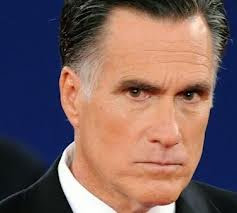
Sour grapes and teeth-gnashing in tweet form:
He didn't win.

Sour grapes and teeth-gnashing in tweet form:
Democrats have voted in Alan Grayson & a woman who pretended to be a Native American on an application. Well done. #TheBlaze2012 #FACEPALM
— Glenn Beck (@glennbeck) November 7, 2012
Monday, November 05, 2012
Kunstler: The Tides of Event
http://kunstler.com/blog/2012/11/the-tides-of-event.html
The Tides of Event
By James Howard Kunstler
on November 5, 2012 8:32 AM
Mitt Romney's sickening insincerity was on full view Sunday night as CNN served up both candidates complete finish-line pitches to the Ohio crowds thought to hold the fate of the election in their fickle sway. Romney has consistently proved one thing over the whole, long, nauseating course of his campaign: that he will say anything to get a vote, no matter how hollow, fatuous, craven, or at odds with reality the utterance is.
Last night he went on about how the USA would become "energy independent" when he opens all federal lands to oil drilling. This plays on some lamebrain notion that there are vast fields of easy-to-get oil sitting out under the Wyoming hardpan waiting to be tapped. Surely Mitt know better.. or does he? The reality is that these lands fell into federal ownership largely because they had so little value in the first place. If there was another Spindletop lurking under the sagebrush you can be sure it would have been found long before now, so Mr. Romney is just preying on the public's wishful ignorance (or his own) when he says these things.
Which gets to the larger issue of what the "drill drill drill" mantra really means: namely, that Mitt Romney has no idea where history is taking us. The public may be very nervous about how they will pay for gasoline needed to live in the suburban matrix, but the reality of the situation is that the suburban matrix is the problem and doing everything and anything we can to prop it up is going to destroy the nation. Mr. Romney is oblivious to this reality and so you can be sure that his mysterious "plan" for leadership is an empty promise. A reality-based plan, for instance, would be the rapid rebuilding and electrification of the regular railroad system, both as an economic development measure and a national security issue, along with the spirited promotion of walkable neighborhoods and the rebuilding of our small towns and small cities. But Mitt is "a car man," as he likes to say.
President Obama was on display, too, a little later making dubious claims about his accomplishments and distinctions. (Jon Corzine is still at large.) There's no evidence that he understands the true nature of the implacable economic contraction underway and how it will change everything about how we live on this continent. But I think there is a better chance that he could get a clue in the next four years than is the case for Mr. Romney. Also, I don't trust Mr. Romney to deal intelligently with foreign nations, while the specter of yet another arch-conservative idiot on the Supreme Court of the type that would rule affirmative on something like the Citizens United case gives me the vapors... so I have to pull the lever for Mr. Obama. [Note: Kunstler lives in New York, which is solidly for Obama. If he wanted to, he could vote for Jill Stein or Rocky Anderson, depending on who's on the ballot. In Hawaii, there are four candidates on the ballot: Obama, Romney, Stein, and Gary Johnson.--P.Z.]
Finally, I just don't like Mitt Romney. He's the over-eager twerp in the classroom with his arm always sticking up. He's the missionary bozo in a necktie ringing your doorbell to sell a fairy-tale cult religion dreamed up in the 1820s by another over-eager con artist. He's obviously using the national stage to work out his father issues (George Romney ran for president in 1968, blundering his way out of the race early on). He shamelessly panders to the worst elements of his own party - the ignorant, militaristic, punitive-minded Nascar evangelicals - and dissembles so automatically that there is nothing left of whatever core beliefs he might have theoretically developed earlier in his career. He's too chicken to engage with the realities of climate change, so visibly on display this season. He's spoiling to rumble with China, apparently oblivious to the fact that China's leader-in-waiting, Xi Jingping, is an army brat. I pray at my little alter of ecumenical totems that the tides of history will sweep Mitt Romney out to the seas of retirement from public life, where he can enjoy his Medicare entitlements secure in the guarantee that he will not be hassled over any pre-existing conditions.
Speaking of tides, we are now a week past the awful depredations of Hurricane Sandy and a lot of people are yet sitting in the cold and dark. The story is still developing - in a way similar to Hurricane Katrina - in the sense that the ordeals of individual suffering and loss are slow to emerge from the chaos of the moment into public awareness. For instance, it took weeks after Katrina for many property owners to learn that the loss of their house was attributed to "flooding," which is generally not covered in home insurance policies. There are still vast neighborhoods, such as Long Beach, Long Island, where the issue hasn't even come up yet, at least not in the news media. When it does, it will be much bigger deal politically than was the case in Biloxi, Mississippi, or the 9th Ward of New Orleans, where people were more accustomed to the cruel boot of authority, not to mention the frequent tantrums of a subtropical ocean.
I don't know how Sandy will affect the electoral results in New York, New Jersey, Virginia, and Pennsylvania, but even if polling places can be set up in ruined, blacked-out districts one would think the eligible voters have a lot more urgent matters on their minds.
Anyway, once this dreadful election is over the floodgates of events will open up and we will once again be forced to reckon especially with the epochal forces that seek to shatter the financial system. Sandy was a kind of preview of coming attractions for a different sort of wreckage to come.
Sunday, November 04, 2012
Bloggingheads.tv Debate Between Max Blumenthal and Conor Friedersdorf
about Gary Johnson and whether or not progressives and libertarians can work together.
Friday, November 02, 2012
On Travel in the Age of Peak Oil and Climate Change
Reading Hattie's post on air travel and global warming has led me to start this one on travel, aviation in particular, in the age of peak oil and climate change. This is a post in progress, and I'll add new links and writing as I refine it.
http://www.airliners.net/aviation-articles/read.main?id=81
http://www.airliners.net/aviation-articles/read.main?id=81
Huffy Muffy
Coozledad at NancyNall linked to this video of Romney (made in 2007) getting mad at a sympathetic interviewer for broaching the subject of his Mormonism.
Maybe he's constipated. Somebody fetch him a glass of prune juice at once!

Maybe he's constipated. Somebody fetch him a glass of prune juice at once!

Victorious Cancelled
I just found out Victorious is airing its final season. News of the show's cancellation broke almost three months ago, but I had no idea until now. As Frost wrote, Nothing gold can stay.
Wednesday, October 31, 2012
Happy Halloween
The Children (Troma Video, 1980)
3 November update: There's a brief overview of the movie (with a few errors and omissions) in John Kenneth Muir's book Horror Films of the 1980s (Jefferson, NC: McFarland, 2007).
3 November update: There's a brief overview of the movie (with a few errors and omissions) in John Kenneth Muir's book Horror Films of the 1980s (Jefferson, NC: McFarland, 2007).
Monday, October 29, 2012
Kunstler: Apocalyptoween
Kunstler ponders the implications of Hurricane Sandy, set to make landfall in two hours.
Apocalyptoween
By James Howard Kunstler
on October 29, 2012 9:33 AM
With little to do while waiting for something possibly very bad to happen people tend to get jokey. That was how I felt about the election until Hurricane Sandy came along. For one thing, I happened to travel (by car - how else?) last week from Bennington through Brattleboro, Vermont, and down into a de-industrialized corner of northwestern Massachusetts. There were at least three major highway bridge re-construction projects (and many lesser ones) still underway along the route from last year's Hurricane Irene, which devastated Vermont. There's a fair chance that Vermont will get whacked again, undoing a billion dollars of work along the same mountain river roads. How demoralizing will that be? And where does the local share of the money come from?
I remember, too, being in Wilkes-Barre, in Eastern Pennsylvania just a few years ago and seeing that the city never actually recovered from floods induced by Hurricane Agnes in 1972, which coincided with the beginning of the end of the local coal industry. The downtown was functionally dead, with a zombie overlay of social services, wig shops, and street people conversing with themselves. It appears that Hurricane Sandy is going to rip through the same region again, then curl east into my part of upstate New York and finally slog into the same new England states that got bashed last year.
Then, of course, there is the question of what happens to New York City in the next 48 hours, a potential enormity too vast to quantify from here (not to mention Washington DC, Philadelphia, Baltimore, Wilmington, and the toxic waste dump formerly known as New Jersey).
My own main worry, sitting here in comfort, in a well-lighted room, is how widespread the electric power outages might be and how long might they last -- conceivably even through the election. Surely, Mr. Obama is pacing nervously now in some deep underground White House command center, worrying about what might be required if there is no electricity to run the voting machines across the nation's most populous region, or if many hundreds of thousands of voters get stranded at home by broken bridges and washed-out roads, or how many votes his government might lose if the juice stays on but he can't relieve the anticipated misery fast enough... with the idiot Romney kibitzing from the sideline.
I don't know if the US can take that kind of disruption and come out the other side the same way it went in. The systems that keep us going are already in trouble, some of them already teetering, like the airline industry, which can barely keep going with jet fuel clocking at 40 percent of its operating costs due to $90-a-barrel oil. The political system itself is more fragile than we might suppose, despite the seemingly despotic reach of surveillance, the size of the government payroll, and the amazing complacency of the sports-and-fructose-saturated public. Few believe in the two major parties, or what they pretend to stand for, including many officers and foot-soldiers in those parties. If the system finds itself unable to hold an election on the day specified by the constitution, what happens then? Another trip to the Supreme Court. Uh-oh....
Anyway, Hurricane Sandy and all it portends this Monday morning is a nice distraction from all the other things un-winding, tottering, and fracturing in so many advanced nations. Promises of massive (and improbable) bailouts have kept the financial meltdown of Europe a few degrees below critical mass for a couple of months, but the thermometer is inching upward with the ominous Catalan regional election in Spain tipping well toward the secessionists, and Greece whirling around the economic drain, with all of its previous bail-out money merely yo-yoing back to the client banks of the "troika" that arranged the bail-outs, and countries like Italy, Portugal, and Ireland whistling past the graveyard beyond the news media's peripheral vision. And then there is China with its government transition hugger-mugger, its empty make-work cities, its crony banking system unaccountable to anyone, and its extremely modest reserves of its own oil to run the whole hastily constructed shootin' match. They have been working earnestly in plain sight - off the news media's radar screen - to construct a resource extraction empire in Africa, but then they will be stuck with the job of defending 12,000 mile supply lines. Good luck with that.
Finally, there is the nauseating spectacle of the presidential election itself, with two creatures of corporate capture pretending to represent the interests of some hypothetical majority who wish to remain the slaves of WalMart and Goldman Sachs. If Hurricane Sandy causes such massive disruption as to interfere with the election, perhaps that will be a good thing - a sudden, unavoidable re-thinking of our ossified institutional customs, and a thrust into the emergent history of the future.
Apocalyptoween
By James Howard Kunstler
on October 29, 2012 9:33 AM
With little to do while waiting for something possibly very bad to happen people tend to get jokey. That was how I felt about the election until Hurricane Sandy came along. For one thing, I happened to travel (by car - how else?) last week from Bennington through Brattleboro, Vermont, and down into a de-industrialized corner of northwestern Massachusetts. There were at least three major highway bridge re-construction projects (and many lesser ones) still underway along the route from last year's Hurricane Irene, which devastated Vermont. There's a fair chance that Vermont will get whacked again, undoing a billion dollars of work along the same mountain river roads. How demoralizing will that be? And where does the local share of the money come from?
I remember, too, being in Wilkes-Barre, in Eastern Pennsylvania just a few years ago and seeing that the city never actually recovered from floods induced by Hurricane Agnes in 1972, which coincided with the beginning of the end of the local coal industry. The downtown was functionally dead, with a zombie overlay of social services, wig shops, and street people conversing with themselves. It appears that Hurricane Sandy is going to rip through the same region again, then curl east into my part of upstate New York and finally slog into the same new England states that got bashed last year.
Then, of course, there is the question of what happens to New York City in the next 48 hours, a potential enormity too vast to quantify from here (not to mention Washington DC, Philadelphia, Baltimore, Wilmington, and the toxic waste dump formerly known as New Jersey).
My own main worry, sitting here in comfort, in a well-lighted room, is how widespread the electric power outages might be and how long might they last -- conceivably even through the election. Surely, Mr. Obama is pacing nervously now in some deep underground White House command center, worrying about what might be required if there is no electricity to run the voting machines across the nation's most populous region, or if many hundreds of thousands of voters get stranded at home by broken bridges and washed-out roads, or how many votes his government might lose if the juice stays on but he can't relieve the anticipated misery fast enough... with the idiot Romney kibitzing from the sideline.
I don't know if the US can take that kind of disruption and come out the other side the same way it went in. The systems that keep us going are already in trouble, some of them already teetering, like the airline industry, which can barely keep going with jet fuel clocking at 40 percent of its operating costs due to $90-a-barrel oil. The political system itself is more fragile than we might suppose, despite the seemingly despotic reach of surveillance, the size of the government payroll, and the amazing complacency of the sports-and-fructose-saturated public. Few believe in the two major parties, or what they pretend to stand for, including many officers and foot-soldiers in those parties. If the system finds itself unable to hold an election on the day specified by the constitution, what happens then? Another trip to the Supreme Court. Uh-oh....
Anyway, Hurricane Sandy and all it portends this Monday morning is a nice distraction from all the other things un-winding, tottering, and fracturing in so many advanced nations. Promises of massive (and improbable) bailouts have kept the financial meltdown of Europe a few degrees below critical mass for a couple of months, but the thermometer is inching upward with the ominous Catalan regional election in Spain tipping well toward the secessionists, and Greece whirling around the economic drain, with all of its previous bail-out money merely yo-yoing back to the client banks of the "troika" that arranged the bail-outs, and countries like Italy, Portugal, and Ireland whistling past the graveyard beyond the news media's peripheral vision. And then there is China with its government transition hugger-mugger, its empty make-work cities, its crony banking system unaccountable to anyone, and its extremely modest reserves of its own oil to run the whole hastily constructed shootin' match. They have been working earnestly in plain sight - off the news media's radar screen - to construct a resource extraction empire in Africa, but then they will be stuck with the job of defending 12,000 mile supply lines. Good luck with that.
Finally, there is the nauseating spectacle of the presidential election itself, with two creatures of corporate capture pretending to represent the interests of some hypothetical majority who wish to remain the slaves of WalMart and Goldman Sachs. If Hurricane Sandy causes such massive disruption as to interfere with the election, perhaps that will be a good thing - a sudden, unavoidable re-thinking of our ossified institutional customs, and a thrust into the emergent history of the future.
Subscribe to:
Posts (Atom)
